
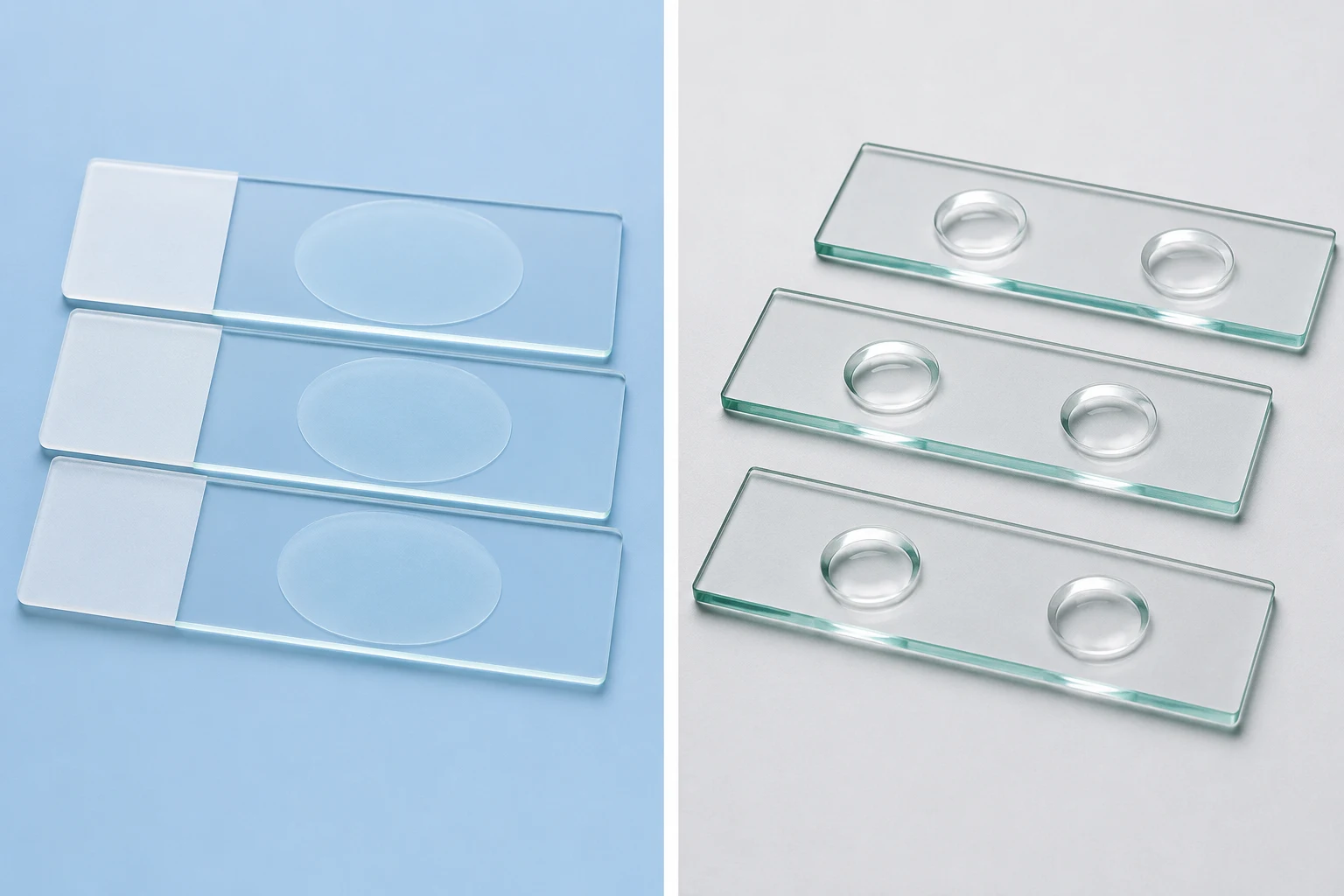
Not all laboratory slides are designed for the same purpose. Different tests require different types of slides, and choosing the right one can make sample preparation easier and improve the accuracy of the results.
Among the many types of VDRL slides and cavity slides used in laboratories, each is designed for a specific application. While VDRL slides are mainly used for serological testing, cavity slides are commonly used to observe liquid samples and live microorganisms. Although both are made of glass, their designs and uses are quite different.
Selecting the right laboratory glass slide not only supports accurate testing but also helps improve laboratory workflow and efficiency. This guide compares both slide types to help laboratories choose the right option for their specific applications.
What Are VDRL Slides?
VDRL slides are specially designed glass slides used for the Venereal Disease Research Laboratory (VDRL) test. They are mainly used to detect syphilis through flocculation reactions in clinical laboratories.
A typical VDRL glass slide design includes a flat ground surface with paraffin rings that help hold the test sample and reagent in place during the procedure. This design allows multiple samples to be tested efficiently on a single slide.
These micro slides are commonly used in:
- Diagnostic laboratories
- Clinical pathology departments
- Blood banks
- Medical testing facilities
Because of their specialised design, laboratory glass slides used for VDRL testing help ensure accurate sample handling and reliable test results.
What Are Cavity Slides?
Cavity slides are glass slides that contain one or more concave depressions, also known as wells. These small cavities are designed to hold liquid samples, making them suitable for observing specimens that require more space than a flat slide can provide.
Depending on the application, laboratories can choose between a cavity glass slide with a single well and cavity well slides with two wells to examine multiple samples simultaneously.
These slides are commonly used for:
- Hanging drop preparations
- Observing live microorganisms
- Studying small aquatic organisms and larvae
- Microbiology research
- Educational laboratory demonstrations
Compared with standard lab glass slides, cavity slides are specifically designed for applications in which liquid samples must remain contained during microscopic observation.
Head-to-Head Comparison
Both slide types are designed for specific laboratory applications. Here’s a quick comparison to help understand where each one is used.
| Feature | VDRL Slides | Cavity Slides |
| Surface Design | Flat glass surface with paraffin rings | Glass surface with one or more concave wells |
| Well/Depression | No cavity; paraffin rings hold the sample | One or two built-in cavities to hold liquid samples |
| Primary Application | Serological testing and flocculation reactions | Hanging drop preparations, live specimen observation, and microbiology studies |
| Common Users | Diagnostic labs, blood banks, and clinical pathology departments | Research laboratories, microbiology labs, educational institutions, and teaching laboratories |
| Use with Coverslip | A glass slide and cover may be used while examining the sample under a microscope, depending on the testing method. | Most cavity slides are used without a coverslip, as the cavity itself holds the liquid sample. |
Both micro slides serve different laboratory purposes, so the choice depends on the type of test or observation being performed.
When to Use Which Slide
Each of these slides serves different purposes in the laboratory. The use of either of the two slides is determined by the type of sample, test procedure, and mode of examination..
- Choose VDRL Slides When:
VDRL slides are the right choice for laboratories performing serological and flocculation tests, especially for syphilis screening.
Their flat surface and paraffin ring design help keep the sample and reagent within the test area, making the procedure more accurate and easier to perform.
They are widely used in clinical diagnostics, pathology laboratories, and blood banks where consistent and reliable test results are essential.
- Choose Cavity Slides When:
Cavity slides are better suited for applications that involve liquid samples or living specimens.
The built-in cavity provides enough space to hold a small amount of liquid without spreading across the slide.
They are commonly used for hanging-drop preparations, observing live microorganisms, studying small aquatic organisms, and conducting practical demonstrations in microbiology and educational laboratories.
A Note on Coverslip Usage
The use of the glass slide and cover is also different in these two slides. In most of the VDRL tests, a coverslip may be used when observing through microscope, based on the procedure used in the lab. However, in cavity slides, a coverslip is not usually necessary since the well holds the sample in place for easy viewing.
Buying Tips & Quality Considerations
Choosing the right laboratory slide is about more than selecting the correct type. The quality of the slide also plays an important role in sample handling, microscope performance, and the consistency of laboratory results.
When purchasing lab glass slides, keep these factors in mind:
- Glass Quality
For precise observation, lab glass slides need to have a smooth and clear surface that allows for clear observation. It is important to have consistent glass for better imaging.
- Edge Finishing
Well-finished and polished edges make the slides safer to handle during routine laboratory work. They also reduce the risk of chipping and accidental injuries during sample preparation or examination.
- Consistent Design
For specialised slides such as VDRL and cavity slides, consistent manufacturing is important. Paraffin rings on VDRL glass slides should be evenly applied, while cavity slides should have uniform well depth and shape to ensure dependable performance during testing.
- Choose a Reliable Manufacturer
Working with an experienced manufacturer will also guarantee a consistent quality in all batches produced. This is particularly true for laboratories and distributors that buy in bulk since reliability is crucial in this case.
- Check Quality Standards
When buying, you can check if the products are produced in accordance with any established quality standards. This may include ISO certificates. These quality-certified slides are vital for ensuring the consistency and reliability of laboratories’ tests.
Choosing the Right Slide for the Right Laboratory Application
Both VDRL slides and cavity slides are designed for specific laboratory procedures, and each serves a different purpose. While VDRL slides are ideal for serological testing and flocculation reactions, cavity slides are better suited for observing liquid samples, live microorganisms, and hanging drop preparations. Selecting the right slide helps improve testing accuracy, supports smooth laboratory workflows, and ensures reliable observations.
Blue Star Slides manufactures high-quality VDRL glass slides, cavity well slides, and other precision-made lab glass slides for diagnostic laboratories, research institutions, hospitals, and scientific distributors. With a strong focus on quality, consistency, and reliable manufacturing, the company offers laboratory products that meet the requirements of a wide range of microscopy and diagnostic applications.