
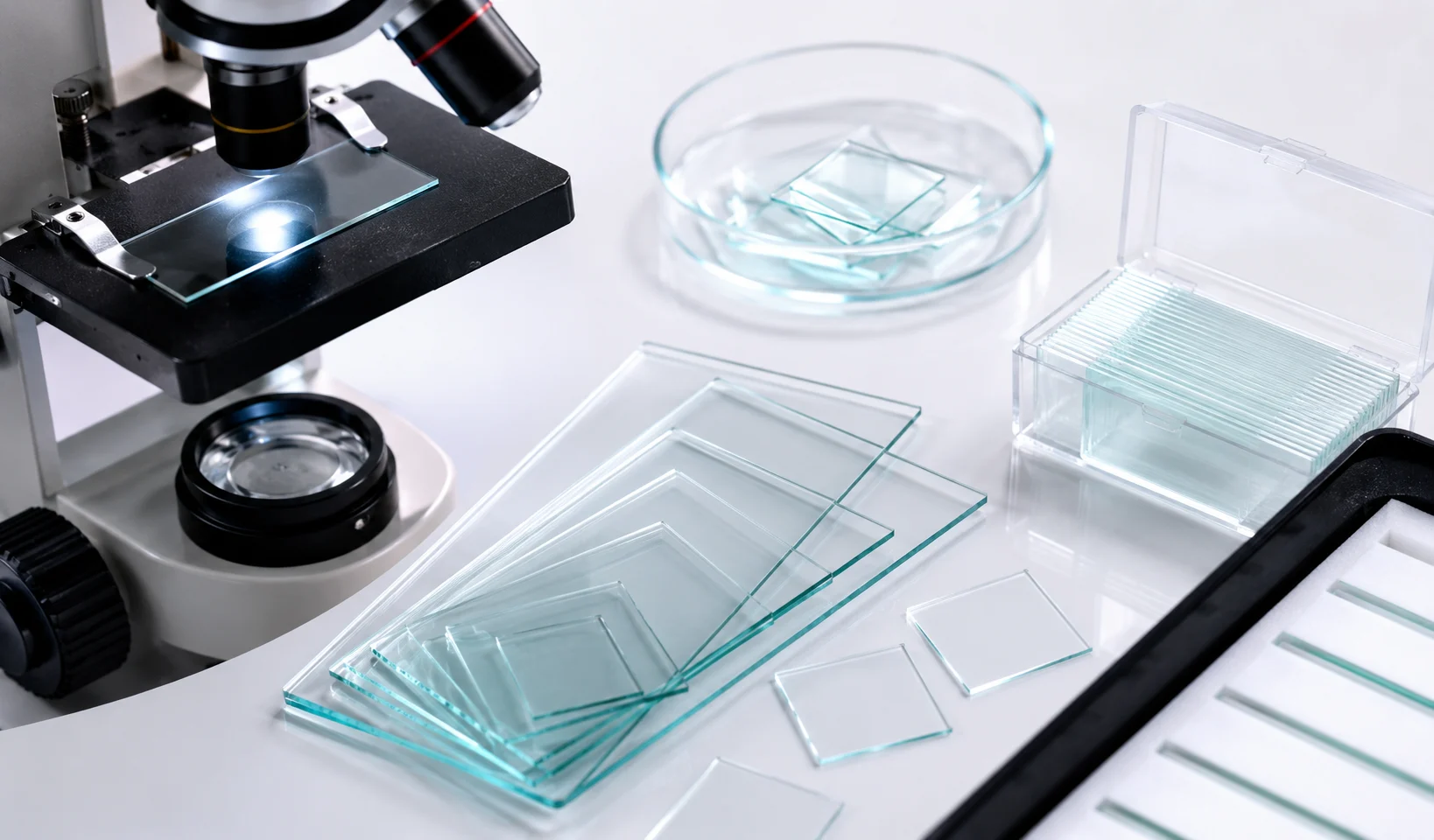
A microscope cover glass is a thin, transparent piece of glass placed over a specimen on a microscope slide. It helps hold the sample in place and creates a smooth surface for microscopic observation. In laboratory work, choosing the right microscope cover glass can affect how clearly a specimen appears under the microscope.
Cover glasses also play an important role in specimen preparation. They can protect the sample from dust and minor handling damage while helping maintain a consistent viewing surface. For laboratories working with tissue sections, cells, microorganisms, or other prepared specimens, the right cover glass supports clear and reliable observation.
Size, thickness, optical quality, and intended application all matter when selecting a microscope slide cover glass. A cover glass that is too thick or poorly matched to the microscope objective can affect image quality. Blue Star Slides provides laboratory glassware designed for professional applications, helping laboratories choose suitable products for their routine microscopy needs.
What Is Microscope Cover Glass?
A microscope cover glass is a thin, transparent piece of glass placed over a specimen on a microscope slide. It keeps the sample in place and provides a stable surface for microscopic observation. A suitable microscope cover slip can also support clear viewing by creating the correct optical path between the specimen and microscope objective.
Cover glass, coverslip, and microscope slide are related but different. The microscope slide is the larger glass backing that holds the specimen, while a coverslip is a thin glass placed over the sample. ‘Cover glass’ is another term for coverslips. Simply, the slide holds the specimen, and the slide coverslip covers it.
Why Is Cover Glass Used?
A microscope glass cover serves several basic purposes during specimen preparation:
- Protects the specimen: Reduces exposure to dust and accidental contact.
- Keeps the sample stable: It helps prevent movement during observation.
- Creates a flat surface: This supports consistent viewing under the microscope.
- Supports image quality: The correct thickness and optical quality can improve image clarity.
- Helps with prepared slides: Coverslips for microscope slides are widely used for biological, pathological, and other laboratory specimens.
The right cover glass should match the microscope and application. Size, thickness, and optical quality all need to be considered for reliable microscopic observation.
Why Is Cover Glass Important in Microscopy?
A cover glass does more than a prepared specimen. It helps protect the sample, keep it in place, and support consistent observation. Using the right microscope cover glass is important when small preparation differences can affect image quality.
Key Functions of Cover Glass
- Protecting the specimen: A thin cover glass helps shield the sample from dust, accidental contact, and minor handling damage.
- Flattening and containing the specimen: It helps spread and contain liquid or soft specimens into a suitable layer for viewing.
- Preventing contamination: A properly placed cover glass creates a barrier that reduces exposure to external particles and contaminants.
- Supporting consistent viewing: A microscope slide cover glass provides a stable surface above the specimen for more consistent observation.
- Maintaining the appropriate distance: Cover glass thickness affects the distance between the specimen and microscope objective. The correct thickness helps maintain intended optical conditions.
- Improving practical handling: Once covered, the prepared slide can be moved, examined, and stored more easily without directly touching the sample.
Selecting suitable cover glasses is therefore an important part of slide preparation. Size, thickness, and optical quality should match the specimen and microscope being used.
Types of Microscope Cover Glass
Different laboratory applications may require different cover glass shapes, sizes, and specifications. Standard options suit many routine tasks, while specific specimens or microscopy methods may require specialised designs. Understanding these types makes it easier to select the right microscope cover glass.
- Standard Cover Glass
Standard cover glass is designed for general laboratory use where routine specimen preparation does not require unusual dimensions or specifications.
It can be used for various basic microscopy applications, including biological and pathological specimens. Size and thickness should be selected according to the slide, specimen, and microscope objective.
- Square Cover Glass
Square cover glass is commonly used where consistent dimensions are preferred. Its uniform shape makes positioning easier and provides predictable specimen coverage.
Standardised sizes can also simplify slide preparation and storage. For laboratories using coverslips for microscope slides regularly, consistent dimensions can make handling more convenient.
- Rectangular Cover Glass
Rectangular cover glass can be useful when greater coverage is needed in one direction. It may suit specific slide layouts, sample areas, or laboratory techniques where a square coverslip is not suitable.
The dimensions should match the prepared specimen and the area to be covered.
- Speciality Cover Glass
Speciality cover glass is designed for applications requiring specific dimensions, thicknesses, or optical properties. It may be considered when standard products do not meet laboratory requirements.
Before selecting a microscope cover glass, consider the specimen type, microscope objective, preparation method, and viewing requirements. These factors can help determine whether a standard or specialised cover glass is more suitable.
Microscope Cover Glass Sizes
The size of a microscope cover glass should match the specimen, slide, and preparation method. The right size makes slide preparation easier and helps keep the specimen properly positioned during observation.
There is no single size for every application. Cover glasses are available in different dimensions for small specimens, routine microscopy, and preparations requiring greater coverage.
Choosing the Right Cover Glass Size
The cover glass should provide enough coverage without making handling difficult. An oversized piece may extend beyond the specimen area, while an undersized microscope cover slip may leave part of the sample exposed.
| Cover Glass Size | Typical Application | Key Consideration |
| Small | Small specimens | Adequate sample coverage |
| Medium | Routine microscopy | General compatibility |
| Large | Larger specimens | Sufficient slide coverage |
When selecting cover glasses, laboratories should consider the specimen area and slide dimensions. The cover glass should sit securely over the prepared area without affecting handling or observation.
For routine work, standard sizes may be suitable, while specialised preparations may require specific dimensions. Size should also be considered alongside thickness, optical quality, and intended use to ensure the microscope slide cover glass suits the complete preparation process.
Microscope Cover Glass Thickness Explained
The thickness of a cover glass is the distance between its two glass surfaces. It matters because the glass sits between the specimen and microscope objective. Choosing the correct microscope cover glass thickness can affect optical performance, especially with higher-magnification objectives.
- Why Does Cover Glass Thickness Matter?
Microscope objectives are designed for specific optical setups. A cover glass that is much thicker or thinner than expected can affect light transmission, reduce image clarity or cause optical issues.
For routine microscopy, suitable microscope cover slip thickness helps maintain consistent viewing conditions. This becomes more important with high-power objectives, where small changes in the optical path can affect image quality.
- Standardised Thickness Classifications
Cover glass is available in standardised thickness classifications rather than as a one-size-fits-all product. These classifications help laboratories match the glass with their microscope objectives.
The exact specification should always be checked against the manufacturer’s product information. Laboratories should not select a microscope glass cover based only on its appearance or size.
- Matching Thickness with Microscope Objectives
Cover glass thickness is particularly important for objectives designed for use with coverslips. These objectives may specify the thickness they are calibrated for.
Before selecting cover glasses, check the markings or technical specifications provided with the microscope objective. Coverslip thickness is often listed alongside magnification and numerical aperture.
- When Does Thickness Need More Attention?
Thickness deserves closer attention when:
- Using high-magnification or high-numerical-aperture objectives.
- Examining specimens where image detail is critical.
- Using techniques with specific optical requirements.
- Replacing an existing cover glass with a different specification.
- Preparing slides for consistent laboratory analysis.
For routine work, follow the recommended specifications for the microscope and objectives. Checking these requirements when selecting a microscope slide cover glass can help avoid compatibility issues.
How to Choose the Right Microscope Cover Glass
Choosing the right cover glass involves more than checking its size. The specimen, preparation method, microscope objective, and handling needs should all be considered. A simple step-by-step approach can make selection easier.
Step 1: Identify the Application
First, determine how the cover glass will be used. Pathology, biological, research, and other laboratory applications may have different requirements.
Step 2: Determine the Required Size
Check the specimen area and slide dimensions. The slide coverslip should provide enough coverage without making positioning or handling difficult.
Step 3: Check Thickness Requirements
Confirm the required thickness before selecting the glass. This is especially important when microscope objectives are designed for a specific coverslip thickness.
Step 4: Consider Glass Quality and Clarity
Optical clarity is important for reliable observation. Choose glass with a clean, clear surface and consistent quality to support accurate viewing.
Step 5: Check Objective Compatibility
Review the specifications of the microscope objectives being used. Matching the microscope cover glass to the recommended thickness is particularly important for high-magnification work.
Step 6: Consider Specimen Preparation
Consider the specimen type, mounting medium, and preparation method. Coverslips for microscope slides should suit the complete preparation process.
Step 7: Evaluate Handling and Packaging
Finally, consider storage, handling, and packaging. Thin glass needs suitable protection during transport and storage to reduce the risk of breakage.
Considering these factors together helps laboratories select a microscope glass cover that suits both the specimen and microscope.
Microscope Cover Glass for Different Applications
The right cover glass depends on the specimen, preparation method, and microscope. Different applications may require different sizes, thicknesses, or optical specifications.
- Biological and Educational Microscopy
Biological and educational microscopy often uses prepared specimens that need protection during observation. A suitable microscope cover glass helps contain the specimen and makes slide handling easier.
- Histology and Pathology
Histology and pathology slides require careful preparation and consistent viewing. The cover glass should match the slide and microscope requirements, including size, thickness, and optical clarity.
- Routine Laboratory Microscopy
Routine microscopy involves regular slide preparation and examination. Standardised options can make handling easier when they match established laboratory procedures.
- Wet-Mount Specimens
Wet mounts contain a liquid medium and specimen between the slide and cover glass. The cover glass helps contain the preparation and provides a stable viewing surface. The microscope cover slip should be suited to the mounting method.
- Research and Specialised Microscopy
Research work may have specific specimen or microscope requirements. Laboratories should check dimensions, thickness, and optical specifications before selecting cover glasses for specialised applications.
Cover Glass vs Microscope Slide: What’s the Difference?
A microscope slide and cover glass have different but connected roles. The slide supports the specimen, while the cover glass protects it and supports observation.
| Factor | Microscope Slide | Cover Glass |
| Position | Below specimen | Above specimen |
| Primary role | Supports specimen | Covers specimen |
| Thickness | Relatively thicker | Much thinner |
| Purpose | Specimen mounting | Protection and optical preparation |
The microscope slide provides the base for preparing, handling, and examining the specimen.
A microscope slide cover glass sits directly over the specimen. It helps contain and protect the sample while providing a suitable optical surface for viewing.
Simply put, the slide holds the specimen, while the microscope glass cover completes the preparation for microscopic observation.
Common Mistakes When Selecting Microscope Cover Glass
Choosing the wrong cover glass can affect specimen preparation, handling, and microscopic observation. Avoiding common mistakes can help laboratories achieve more consistent results.
- Choosing the wrong thickness: A thickness that does not match the microscope objective can affect optical performance, especially with high-magnification objectives.
- Selecting an unsuitable size: An undersized cover glass may not fully cover the specimen, while an oversized one can be harder to position.
- Ignoring objective compatibility: Check the microscope objective specifications before selecting a microscope cover glass.
- Using poor-quality glass: Poor optical clarity or inconsistent glass quality can affect specimen observation.
- Improper placement: Position the cover glass carefully to avoid specimen movement or uneven coverage.
- Applying excessive pressure: Too much pressure can damage the glass or disturb the specimen.
- Handling glass incorrectly: Careful handling helps reduce breakage and contamination.
- Inadequate specimen coverage: A microscope cover slip should completely cover the prepared specimen, leaving no important areas exposed.
Avoiding these mistakes can make cover glass selection and slide preparation more reliable for routine laboratory work.
How to Handle and Store Microscope Cover Glass
Proper handling and storage help protect thin glass from breakage, dust, and contamination while maintaining optical quality.
- Handle carefully: Hold the cover glass gently to reduce the risk of cracks, chips, or breakage.
- Keep it clean: Store glass away from dust, moisture, and other contaminants.
- Avoid touching optical surfaces: Handle the edges, when possible, to reduce fingerprints and marks.
- Use protective packaging: Keep unused cover glasses in suitable packaging during storage and transport.
- Follow laboratory procedures: Follow handling, cleaning, and storage practices recommended by the laboratory and manufacturer.
Careful handling is important when using a microscope cover glass, as its thin structure makes it more vulnerable to damage than a standard microscope slide.
Choose the Right Cover Glass for Your Microscopy Application
Choosing the right cover glass supports consistent specimen preparation and microscopic observation. Size, thickness, optical quality, and application should all be considered.
The microscope cover glass should provide adequate specimen coverage and match the slide dimensions. Thickness is also important, especially when microscope objectives have specific coverslip requirements. Checking objective specifications helps ensure compatibility.
Optical quality matters as well. Clear, consistent glass provides a suitable viewing surface, while the application determines whether standard or specialised specifications are needed.
Blue Star Slides offers laboratory glass products for professional applications, helping laboratories and scientific users select suitable cover glasses. For product specifications or application enquiries, contact Blue Star Slides directly.