
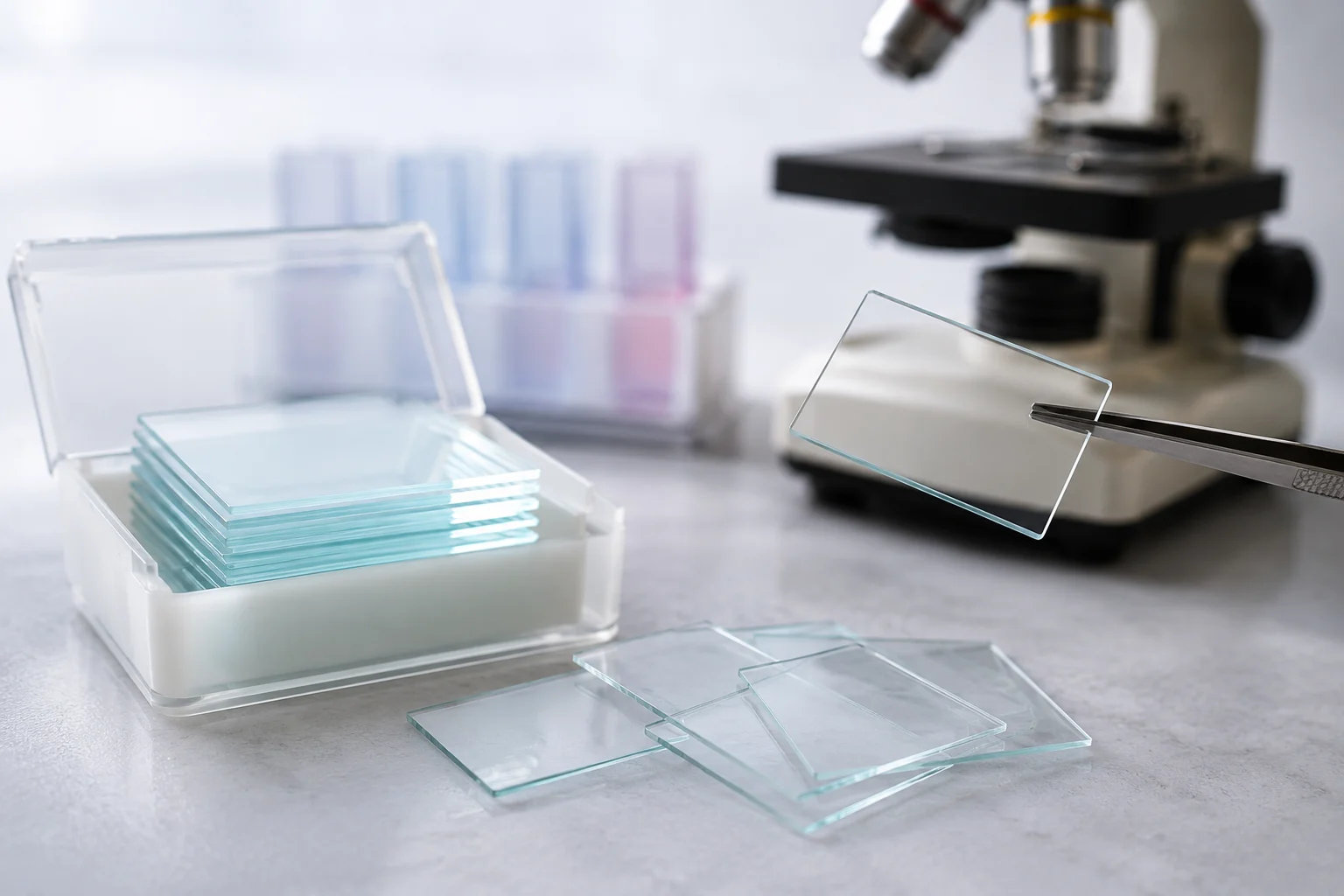
In laboratories, even small components used during sample preparation can affect microscopy results. Coverslips help protect specimens, improve image clarity, and support accurate analysis. Factors such as glass quality, thickness, size, and compatibility should be considered before purchasing.
Blue Star Slides provides quality glass products designed for scientific and diagnostic applications. Choosing the right coverslips for microscope slides helps laboratories improve sample preparation and achieve reliable microscopy results.
Many laboratories overlook coverslip selection, focusing only on microscope slides. However, using an unsuitable product can lead to issues such as image distortion, sample damage, and difficulty observing. Understanding application requirements and product specifications helps laboratories make better purchasing decisions.
What Are Coverslips?
Coverslips are thin, transparent glass pieces placed over specimens on microscope slides. They protect samples, provide a stable viewing surface, and improve observation accuracy. These are used in pathology labs, research facilities, medical institutions, and educational labs.
A laboratory cover slip is manufactured with specific thickness and size standards to support different microscopy applications. Unlike regular glass, professional coverslips are designed with features such as:
- Optical transparency
- Uniform thickness
- Smooth surface finish
- Clean and clear viewing quality
- Compatibility with microscopy techniques
A properly manufactured microscope slide cover glass helps maintain the correct distance between the specimen and microscope lens, allowing better focus and clearer images.
Purpose of Microscope Coverslips
Coverslips protect specimens, prevent contamination, keep samples in place, and offer a flat surface for accurate viewing.
Key benefits include:
- Protecting samples from dust and damage
- Keeping liquid specimens evenly distributed
- Supporting accurate focusing
- Improving image clarity
Using suitable microscope slides and coverslips helps laboratories maintain sample quality during analysis. Coverslips also protect microscope lenses by preventing direct contact with specimens or mounting materials.
How They Improve Microscopy
Coverslips improve microscopy by creating a consistent optical path between the sample and microscope lens. High-quality coverslips for microscope slides support:
- Clearer specimen visibility
- Better light transmission
- Improved image sharpness
- More accurate observation
The correct thickness and quality of a coverslip help microscopes perform effectively. Selecting reliable microscope glass coverslips allows laboratories to achieve consistent results across pathology, research, and diagnostic applications.
Factors to Consider Before Buying Coverslips
Choosing the right coverslip is essential for accurate microscopy results. Laboratories should consider factors such as glass quality, thickness, size, clarity, and chemical compatibility based on their application requirements.
Glass Quality
Glass quality affects image clarity and microscope performance. High-quality cover glasses should offer:
- Clear transparency
- Smooth finish
- Consistent quality
- Minimal defects
Poor-quality glass can reduce image accuracy and create handling issues. A reliable laboratory cover slip supports better observation and durability.
Thickness
Coverslip thickness should match microscope objective requirements. The wrong thickness can affect focus and image quality.
Common standards include:
- No. 0: Very thin applications
- No. 1: Routine microscopy
- No. 1.5: High-resolution imaging
- No. 2: Applications needing extra strength
Choosing the correct microscope slide cover glass thickness helps improve observation accuracy.
Size
Coverslip size should match the slide and sample requirements. Common sizes include:
| Coverslip Size | Common Use |
| 18 mm × 18 mm | Small specimens |
| 22 mm × 22 mm | General applications |
| 22 mm × 40 mm | Larger samples |
| 24 mm × 50 mm | Extended coverage |
Using compatible microscope slides and coverslips ensures smoother sample preparation.
Optical Clarity
Clear coverslips improve light transmission and specimen visibility. Laboratories should look for:
- High transparency
- Low distortion
- Clear surface
- Consistent performance
This is important for accurate diagnostic and research observations.
Surface Flatness
A flat surface helps maintain proper specimen contact and accurate focusing. Quality slide coverslip products reduce image variations caused by surface irregularities.
Scratch Resistance
Scratches can affect image quality and microscopic analysis. Durable microscope cover slip products with proper packaging help prevent surface damage during storage and handling.
Chemical Compatibility
Coverslips should work well with stains, mounting media, and laboratory chemicals. Before purchase, consider:
- Sample type
- Chemicals used
- Mounting method
- Storage conditions
Choosing compatible microscope glass coverslips helps maintain reliable performance and efficient laboratory processes.
Choosing Coverslips Based on Laboratory Applications
Different labs have varying requirements based on samples, testing methods, and microscopes. Choosing the right coverslip enhances sample handling, image quality, and microscopy accuracy.
Before choosing coverslips for microscope slides, laboratories should consider sample type, staining methods, imaging needs, and microscope compatibility.
Histopathology
Histopathology requires clear observation of tissue samples. Suitable coverslips should provide:
- High optical clarity
- Consistent thickness
- Smooth surface
- Staining compatibility
A reliable microscope slide cover glass helps maintain focus and supports detailed tissue examination.
Cytology
Cytology involves analysing individual cells, making clear visibility and sample protection essential. Important factors include:
- Clear imaging
- Stable positioning
- Staining compatibility
- Consistent quality
A quality laboratory cover slip helps protect delicate samples during analysis.
Microbiology
Microbiology laboratories require coverslips suitable for different sample preparation methods. Key considerations include:
- Wet mount compatibility
- Chemical resistance
- Optical clarity
- Easy handling
A dependable slide coverslip supports clear observation of microorganisms.
Clinical Diagnostics
Clinical laboratories need reliable coverslips for accurate sample examination. Important features include:
- High clarity
- Uniform thickness
- Consistent performance
- Diagnostic compatibility
Using suitable microscope cover glass helps maintain sample stability during testing.
Research Laboratories
Research applications often require precision and advanced imaging support. Coverslips should offer:
- Detailed imaging
- Accurate observation
- Optical consistency
- Application suitability
Selecting the right microscope glass coverslips helps researchers achieve reliable microscopy results.
Common Buying Mistakes to Avoid Before Selecting Coverslips
Choosing the right coverslip is vital for accurate microscopy, but many labs base decisions solely on price or availability, risking product performance. Before selecting coverslips for microscope slides, laboratories should consider factors such as quality, thickness, size, and storage.
Buying Solely Based on Price
Selecting the cheapest option may reduce initial costs but can affect quality and reliability. Low-quality microscope glass coverslips may cause:
- Poor image clarity
- Breakage issues
- Uneven thickness
- Reduced performance
Laboratories should compare quality, specifications, and suitability for application before purchasing.
Ignoring Thickness
Incorrect thickness can affect focusing and image quality. Before buying microscope cover glass, laboratories should check the microscope requirements and choose a suitable standard, such as No. 0, No. 1, No. 1.5, or No. 2.
Using Incorrect Dimensions
Wrong sizes can affect sample coverage and handling. Laboratories should confirm:
- Slide size
- Sample area
- Mounting method
- Application needs
Choosing the correct slide coverslip size ensures better sample protection and workflow efficiency.
Poor Storage
Improper storage can damage coverslips or cause contamination. Laboratories should:
- Keep packaging sealed
- Avoid moisture and dust
- Handle carefully
Proper storage helps maintain laboratory cover slip quality until use.
Choosing Non-Standard Products
Non-standard products may have inconsistent quality and performance. Laboratories should check specifications, quality standards, and supplier reliability before purchasing.
Using standard microscope cover slip products supports better compatibility and consistent microscopy results.
Making a Better Purchasing Decision
A careful selection process helps laboratories choose suitable coverslips. Consider:
- Application requirements
- Thickness and size
- Optical quality
- Product specifications
- Supplier reliability
Choosing the right microscope slides and coverslips helps improve accuracy, reduce wastage, and maintain efficient laboratory workflows.
Why High-Quality Microscope Cover Glass Is Worth the Investment
Coverslip quality affects microscopy by protecting specimens, enhancing visibility, and supporting accurate observations. Choosing reliable microscope cover glass helps laboratories reduce errors and maintain consistent results.
Better Imaging
High-quality coverslips offer better transparency and surface consistency, leading to clearer images and improved specimen visibility.
Benefits include:
- Better light transmission
- Clearer specimen details
- Improved observation accuracy
Using dependable coverslips for microscope slides supports better imaging in diagnostic and research applications.
Reduced Slide Preparation Errors
Consistent quality helps prevent common issues such as uneven coverage, air bubbles, and handling difficulties. Reliable microscope slide cover glass allows smoother sample preparation and better specimen protection.
Longer Shelf Life
Quality coverslips offer better durability and storage stability. They help reduce wastage, replacement needs, and maintain product performance over time.
Improved Laboratory Efficiency
Reliable microscope slides and coverslips support consistent workflows by reducing errors and improving handling. Laboratories should consider glass quality, thickness, clarity, and application requirements to achieve accurate microscopy results.
Questions to Ask Before Purchasing Coverslips
Before buying coverslips, laboratories should check quality, specifications, and compatibility to ensure accurate microscopy results.
Is the Glass Optically Clear?
Clear glass improves light transmission and image quality. Choose microscope glass coverslips with good transparency and minimal distortion.
Are Dimensions Consistent?
Correct sizing ensures proper sample coverage and easy handling. Check dimensions before selecting a slide coverslip.
Is Thickness Standardised?
The right thickness supports better focusing and imaging. Choose microscope slide cover glass based on microscope and application requirements.
Is the Manufacturer Experienced?
An experienced manufacturer ensures better quality, consistency, and reliable supply of cover glasses.
Are Products Quality Tested?
Quality-tested laboratory cover slip products offer better performance, fewer defects, and consistent laboratory results.
How to Store Coverslips Properly
Proper storage maintains coverslip quality by preventing breakage, contamination, and surface damage, especially since these thin, delicate glass components are prone to damage.
Laboratories using microscope glass coverslips should follow these practices:
Moisture Protection
Moisture can affect coverslip quality and cleanliness. Laboratories should:
- Store in dry areas
- Keep original packaging
- Avoid humidity exposure
- Maintain proper conditions
Dust Prevention
Dust can impact sample preparation and microscopy results. To prevent contamination:
- Keep packs sealed
- Avoid unnecessary handling
- Store away from dust
- Use clean tools
Safe Handling
Careful handling reduces the risk of scratches and damage. Recommended practices include:
- Handle with clean instruments
- Avoid direct surface contact
- Open packs carefully
- Store unused products safely
Temperature Considerations
Stable temperatures help preserve coverslip performance. Laboratories should:
- Store at room temperature
- Avoid excessive heat
- Keep away from sunlight
- Maintain clean storage areas
Following these practices helps maintain the quality of cover glasses and supports reliable microscopy results.
Choosing Quality Coverslips for Reliable Laboratory Performance
Selecting the right coverslip requires careful evaluation of factors such as glass quality, thickness, size, compatibility, and storage practices. A well-informed purchase decision helps laboratories achieve clearer observations, reduce preparation issues, and maintain consistent microscopy results.
Using reliable coverslips for microscope slides supports accurate analysis across pathology, diagnostics, and research applications. Blue Star Slides provides quality laboratory glass solutions designed to meet professional microscopy requirements.
To explore suitable microscope cover glass solutions for your laboratory needs, contact Blue Star Slides today and choose products that support reliable laboratory performance.